23 May, 2024
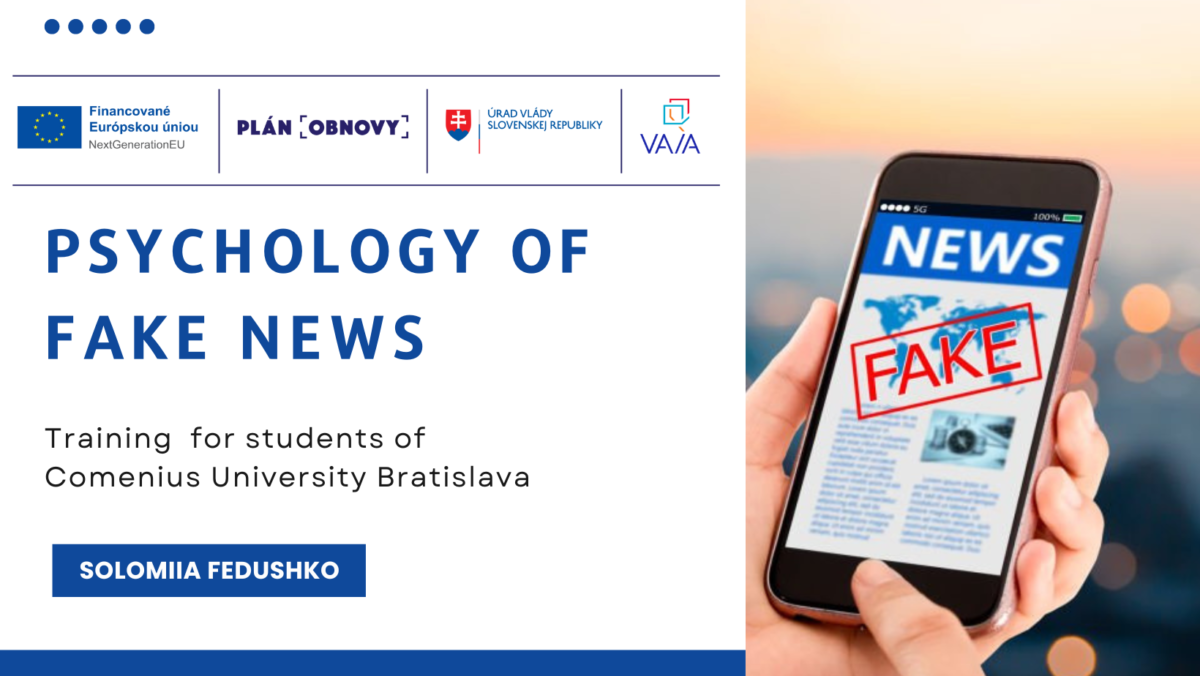
The “Psychology of Fake News” training program is designed to equip students at Comenius University Bratislava with a comprehensive understanding of the psychological mechanisms behind the creation, spread, and belief in fake news. This training will explore cognitive biases, emotional triggers, social influences, and technological factors contributing to misinformation proliferation. The program aims to foster critical thinking, media literacy, and responsible information consumption among students.
Lector – Solomiia Fedushko
Funded by the EU NextGenerationEU through the Recovery and Resilience Plan for Slovakia under the project No. 09I03-03-V01-000153
The primary aim of this training is to:
- Educate students about the psychological foundations of fake news.
- Enhance students’ ability to evaluate information sources critically.
- Develop skills to identify and combat misinformation.
- Promote responsible sharing and consumption of news.
Training Plan
1. Introduction to Fake News
- Definition and examples of fake news
- Historical context and evolution of misinformation
- The impact of fake news on society
2. Psychological Foundations
- Cognitive biases (confirmation bias, availability heuristic, etc.)
- Emotional triggers and their role in spreading fake news
- The psychology of belief and persuasion
3. Social Influences and Fake News
- Social media dynamics and echo chambers
- The role of influencers and opinion leaders
- Groupthink and collective behavior
4. Technological Factors
- Algorithms and filter bubbles
- The role of bots and automated accounts
- Deepfakes and other advanced misinformation technologies
5. Critical Evaluation Skills
- Fact-checking methods and resources
- Analyzing sources for credibility and bias
- Practical exercises in identifying fake news
6. Combating Misinformation
- Strategies for countering misinformation
- The role of education and media literacy
- Case studies of successful interventions
7. Ethical Considerations and Responsible Sharing
- Ethical implications of spreading misinformation
- Personal responsibility in information sharing
- Promoting healthy information environments
By the end of this training, students will have a deeper understanding of the psychological mechanisms behind fake news, enhanced critical thinking and media literacy skills, and the ability to responsibly consume and share information in the digital age.